


-
Penguin Modern Classics
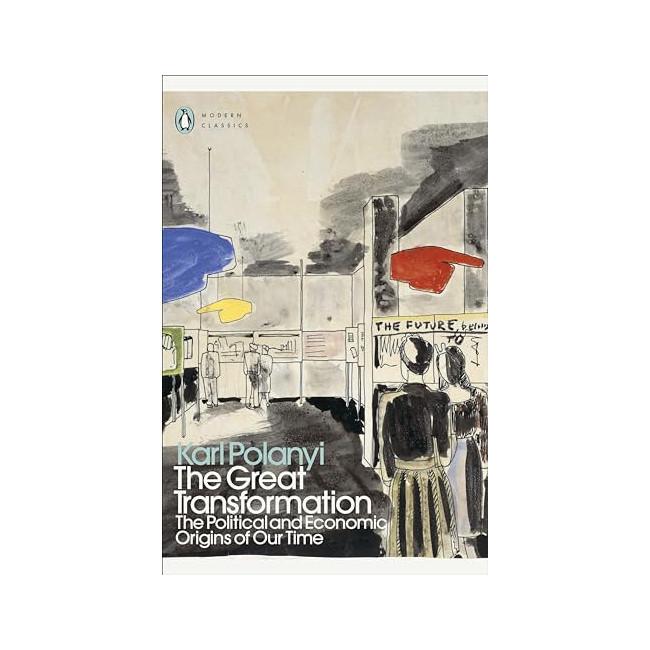
Penguin Modern Classics : The Great Transformation (Paperback, 영국판)
15,000원
- 《거대한 전환》 영어원서


이 책은 시장 자유주의, 즉 나라 단위의 사회들과 지구 경제를 모두 자기조정 시장을 통해 조직할 수 있으며, 또 그렇게 해야 한다는 믿음에 대해 지금까지 나온 가장 강력한 비판을 제공한다.
시장 자본주의를 분석하는 정치경제학자로서의 폴라니가 갖는 시각의 새로움은 어디에 있을까. 바로 우리 시대의 경제위기 현상을 제대로 분석하는 틀은 무엇일까라는 문제와도 연관될 수 있을 것이다. 마르크스는 시장 자본주의의 비인간성을 고발하고 그 작동 법칙의 내적 모순을 분석함으로써 그것을 아예 폐절해야 한다고 주장하며, 케인스는 시장 자본주의 특히 금융 자본주의가 본질적으로 비합리적인 운동을 할 수밖에 없다는 점을 들어 그것을 국가의 적절한 개입으로 조절하고 규제해야 한다고 본다.
하지만 폴라니는 그보다 시장경제란 현실에 존재할 수 없는 것이며, 거기에 담겨 있는 인간.자연.화폐가 상품에 불과하다는 상품 허구는 단지 우리의 현실을 바라보고 착각하는 일종의 상상이요 매트릭스라는 것이다. 그래서 그가 제시하는 해결책의 방향 또한 시장경제를 폐절하거나 국가에 의한 적절한 개입 등으로 그저 규제하는 것이 아니다. 올바른 방향은 사회라는 실체와 거기에 담겨 있는 인간의 자유와 가치와 이상을 틀어쥐고서, 국가와 시장을 그러한 목적에 복무할 수 있는 기능적 제도로 제자리에 돌려놓은 것이다.
칼 폴라니의 이 책은 세 부분으로 구성되어 있다. 제1부와 제3부에서는 어떻게 1815년에서 1914년까지 오랜 기간에 걸쳐 상대적인 평화와 번영을 구가해온 유럽이 갑자기 세계대전에 빠져들고 그 다음에는 경제적 붕괴가 이어지는가에 대해 의문을 제기한다. 그러고 나서 이 책의 핵심인 제2부에서 그 수수께끼에 대한 해답을 제시한다.
시장 자본주의를 분석하는 정치경제학자로서의 폴라니가 갖는 시각의 새로움은 어디에 있을까. 바로 우리 시대의 경제위기 현상을 제대로 분석하는 틀은 무엇일까라는 문제와도 연관될 수 있을 것이다. 마르크스는 시장 자본주의의 비인간성을 고발하고 그 작동 법칙의 내적 모순을 분석함으로써 그것을 아예 폐절해야 한다고 주장하며, 케인스는 시장 자본주의 특히 금융 자본주의가 본질적으로 비합리적인 운동을 할 수밖에 없다는 점을 들어 그것을 국가의 적절한 개입으로 조절하고 규제해야 한다고 본다.
하지만 폴라니는 그보다 시장경제란 현실에 존재할 수 없는 것이며, 거기에 담겨 있는 인간.자연.화폐가 상품에 불과하다는 상품 허구는 단지 우리의 현실을 바라보고 착각하는 일종의 상상이요 매트릭스라는 것이다. 그래서 그가 제시하는 해결책의 방향 또한 시장경제를 폐절하거나 국가에 의한 적절한 개입 등으로 그저 규제하는 것이 아니다. 올바른 방향은 사회라는 실체와 거기에 담겨 있는 인간의 자유와 가치와 이상을 틀어쥐고서, 국가와 시장을 그러한 목적에 복무할 수 있는 기능적 제도로 제자리에 돌려놓은 것이다.
칼 폴라니의 이 책은 세 부분으로 구성되어 있다. 제1부와 제3부에서는 어떻게 1815년에서 1914년까지 오랜 기간에 걸쳐 상대적인 평화와 번영을 구가해온 유럽이 갑자기 세계대전에 빠져들고 그 다음에는 경제적 붕괴가 이어지는가에 대해 의문을 제기한다. 그러고 나서 이 책의 핵심인 제2부에서 그 수수께끼에 대한 해답을 제시한다.
‘One of the most powerful books in the social sciences ever written’ Thomas Piketty
'The twentieth century's most prophetic critic of capitalism' Prospect
‘Polanyi’s revolutionary work is a must-read’ Mariana Mazzucato
Karl Polanyi's landmark 1944 work is one of the earliest and most powerful critiques of unregulated markets. Tracing the history of capitalism from the great transformation of the industrial revolution onwards, he shows that there has been nothing 'natural' about the market state. Instead of reducing human relations and our environment to mere commodities, the economy must always be embedded in civil society. Describing the 'avalanche of social dislocation' of his time, Polanyi’s hugely influential work is a passionate call to protect our common humanity.
‘Polanyi's vision for an alternative economy re-embedded in politics and social relations offers a refreshing alternative’ Guardian
‘Polanyi exposes the myth of the free market’ Joseph E. Stiglitz
With a new introduction by Gareth Dale
'The twentieth century's most prophetic critic of capitalism' Prospect
‘Polanyi’s revolutionary work is a must-read’ Mariana Mazzucato
Karl Polanyi's landmark 1944 work is one of the earliest and most powerful critiques of unregulated markets. Tracing the history of capitalism from the great transformation of the industrial revolution onwards, he shows that there has been nothing 'natural' about the market state. Instead of reducing human relations and our environment to mere commodities, the economy must always be embedded in civil society. Describing the 'avalanche of social dislocation' of his time, Polanyi’s hugely influential work is a passionate call to protect our common humanity.
‘Polanyi's vision for an alternative economy re-embedded in politics and social relations offers a refreshing alternative’ Guardian
‘Polanyi exposes the myth of the free market’ Joseph E. Stiglitz
With a new introduction by Gareth Dale
총
0
개의 상품평
- 등록된 상품후기가 없습니다.