




현재 위치
홈Non-Fiction [논픽션]


페이스북
트위터-

카카오톡


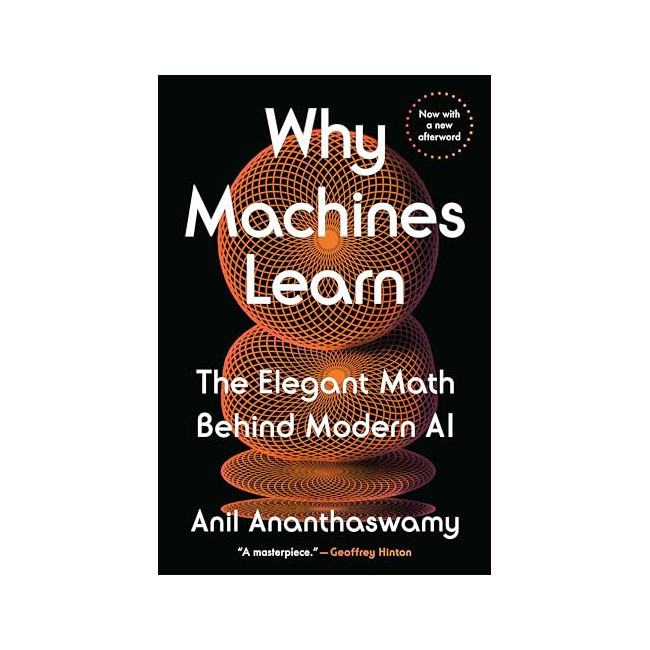
Machine learning systems are making life-altering decisions for us: approving mortgage loans, determining whether a tumor is cancerous, or deciding if someone gets bail. They now influence developments and discoveries in chemistry, biology, and physics—the study of genomes, extrasolar planets, even the intricacies of quantum systems. And all this before large language models such as ChatGPT came on the scene.
We are living through a revolution in machine learning-powered AI that shows no signs of slowing down. This technology is based on relatively simple mathematical ideas, some of which go back centuries, including linear algebra and calculus, the stuff of seventeenth- and eighteenth-century mathematics. It took the birth and advancement of computer science and the kindling of 1990s computer chips designed for video games to ignite the explosion of AI that we see today. In this enlightening book, Anil Ananthaswamy explains the fundamental math behind machine learning, while suggesting intriguing links between artificial and natural intelligence. Might the same math underpin them both?
As Ananthaswamy resonantly concludes, to make safe and effective use of artificial intelligence, we need to understand its profound capabilities and limitations, the clues to which lie in the math that makes machine learning possible.
In a brand-new afterword exclusively in the paperback edition, Ananthaswamy dives into the Transformer architecture that makes large language models like ChatGPT possible and points to groundbreaking future directions enabled by the technology.
배송안내
※ 배송기간 : 결제일로 부터 2 ~ 4 일 소요 ( 공휴일 제외)
- 국내제작 사입상품, DVD, 도서/산간지역은 5 ~ 7 일 소요
※ 배송비 : 2,500 원 ( 실 결제금액 기준 3 만원이상 구매시 무료 )
- 제주 및 기타 도서지역 : 도선료( 기본배송비 + 3,000 원 ~ 8,000원 )
- 군부대 및 해외배송은 지원되지 않습니다.
※ 협력택배사 : CJ 대한통운 http://www.doortodoor.co.kr/
☎ 1588 - 1255 ( 월 ~ 금 08:00 ~ 18:00 / 토 09:00 ~ 13:00 )
교환/반품 안내
※ 상품 수령 후 7 일 이내에 고객센터를 통해 신청하실 수 있습니다.
(전화 / 카톡 / 1:1문의 )
- 이벤트 상품일 경우 사은품도 같이 반납해 주셔야 환불됩니다.
- 상품불량인 경우 배송비를 포함한 전액이 환불됩니다.
※ 전 상품 반품시 5,000 원 ( 고객부담 )
- 부분 반품시, 주문금액이 3만원 이상이면 2,500 원 (고객부담)
주문금액이 3 만원 미만이면 5,000 원 (고객부담)
※ 반품 / 교환 불가능한 경우
- 포장된 도서, CD 등의 포장을 개봉 및 훼손한 경우,
- 단기간에 필독이 가능한 도서
ex) CD, 여행서, 만화, 요리책, 지도, 사진집, 워크북 등
※ 반품주소
- 서울특별시 성동구 성수일로 55(SK테크노빌딩) 지하1층 101~102호
이미지 확대보기
[파본:B급]Why Machines Learn: The Elegant Math Behind Modern AI



 고객님은
안전거래를 위해 현금등으로 결제시 저희 쇼핑몰에서 가입한
구매안전서비스를 이용하실 수 있습니다.
고객님은
안전거래를 위해 현금등으로 결제시 저희 쇼핑몰에서 가입한
구매안전서비스를 이용하실 수 있습니다.